
Cycle — A Garden Should Not Be Designed Only for the Day It Is Finished
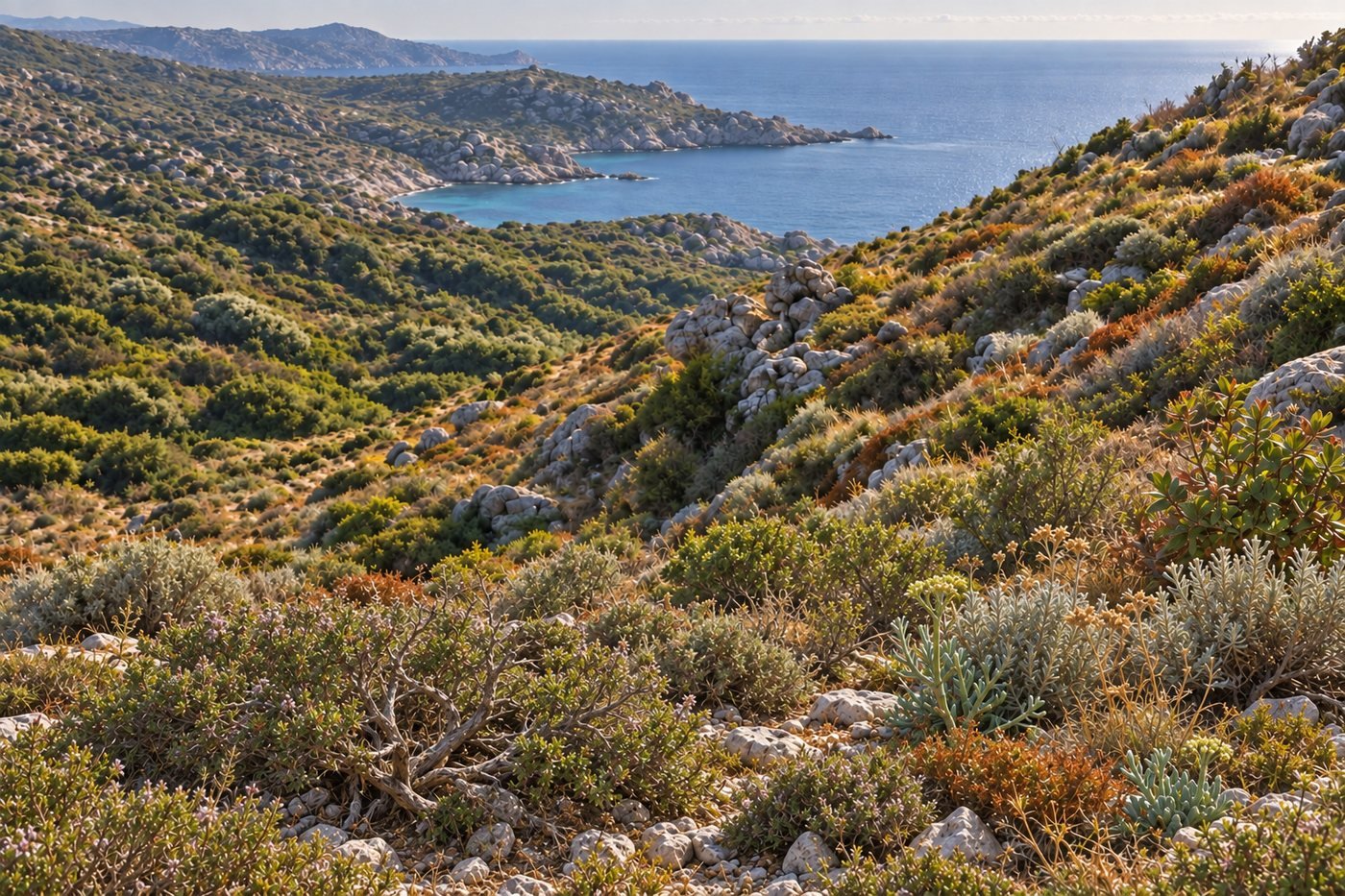
Design not only for today, but for what the garden may become in 1, 3 and 5 years
Many gardens look beautiful when they are first completed.
Plants are the right size, edges are clear and the composition feels balanced.
Then time begins to change things.
Some plants grow faster than expected and overwhelm their neighbours.
Some areas become increasingly dense.
Spaces that were originally open are gradually occupied by shrubs.
Some plants disappear, while others begin to spread or self-seed.
This does not necessarily mean that the design has failed.
Plants are living material.
The real question is whether the garden’s change over time was considered during the design process.
This is what I mean by Cycle within the Living Landscape Method.
01|A garden is not a static image
Natural landscapes never remain permanently fixed.
In Mediterranean environments, an open site may gradually be colonised by herbaceous plants and pioneer species, followed by shrubs and eventually more mature plant communities.
Fire, grazing, abandonment, cutting and other disturbances can then alter that process again.
Landscape is therefore always moving through succession, adjustment and dynamic balance.
Thinking about these processes changes the way we design gardens.
It is not enough to ask:
We also need to ask:
Garden design should include the path towards maturity, not only the starting point.
02|The most expensive maintenance often comes from change that was never anticipated
Many maintenance problems are not caused by poor gardening.
They begin much earlier, during design.
An area intended to remain open may gradually become colonised by pioneer vegetation and shrubs.
A planting scheme that begins too densely may require heavy thinning after only a few years.
A space intended to remain visually open may slowly lose that quality if there is no management strategy.
Maintenance therefore should not begin only when a problem appears.
A better question during design is:
How will this vegetation behave over time?
Anticipating change can reduce corrective pruning, unnecessary replacement and avoidable maintenance costs later.
03|I do not design a single state. I design a trajectory.
In my work, I prefer to divide the garden into areas with different intended behaviours.
Some can be allowed to evolve more freely.
Some need to remain relatively open.
Some require a stable and clearly legible structure.
Others can gradually become more naturalistic.
For each area, we can define:
These decisions allow us to influence:
how quickly the garden matures, the direction in which it develops, and how much management it will require.
So the project is not only about the garden as it is today.
It is about where we want the garden to go next.
04|Do not stop change. Guide it.
The principle of Cycle is not about keeping the garden frozen in its first-year appearance.
That would be unrealistic and often expensive.
A better approach is to accept change while giving it direction.
Take an open planting area.
If it is completely unmanaged, shrubs may progressively colonise it and the vegetation may become more closed.
With small amounts of selective management each year, it may remain an open, layered plant community for much longer.
With mineral mulch, drought-tolerant planting and a more stable structure, it can maintain another kind of open character.
None of these approaches is universally right or wrong.
The real questions are:
and
05|The gardener is not there to “repair” the design. They help continue it.
This is particularly important in the relationship between designer and gardener.
If a gardener receives only a planting plan without understanding how the garden is intended to evolve, maintenance can easily become:
“It grew, so cut it back.”
But not every increase in density is a problem.
Self-seeding, spreading and changing plant volumes may be intentional parts of the design.
That is why I prefer to define from the beginning:
Once the gardener understands the long-term direction, maintenance becomes far more precise.
Their role is no longer simply to keep the garden tidy.
They help the landscape mature in the direction intended by the design.
06|Giving the garden owner a clearer picture of the future
This approach also brings a very practical benefit to the garden owner.
You know more clearly what to expect.
Instead of facing a changing garden each year and asking:
“Should I cut this?”
“Has this area become too messy?”
“Why does the garden no longer look the way it did when it was finished?”
you already understand which changes are normal and which require intervention.
Change no longer automatically means loss of control.
It becomes part of the design.
07|From planting design to an evolution and care strategy
This is where Cycle becomes a practical design service.
For gardens that I follow through implementation, the project can include not only the initial planting plan but also a garden evolution and care strategy.
This may include:
This gives the designer, gardener and garden owner a shared picture of the future.
And it makes it much more likely that the garden built today will grow into the landscape originally imagined.
Cycle|Time as a Design Material
For me, designing for Cycle does not mean predicting every branch or every plant that will appear in the future.
Plants are not construction materials, and they cannot be fully controlled.
What matters is:
The garden then stops being a photograph of the day it was completed.
It becomes a system capable of growing, adapting and maturing over the years.
Do you have a new or existing garden and want to understand how it could evolve over time?