
Ligurian Mediterranean Garden
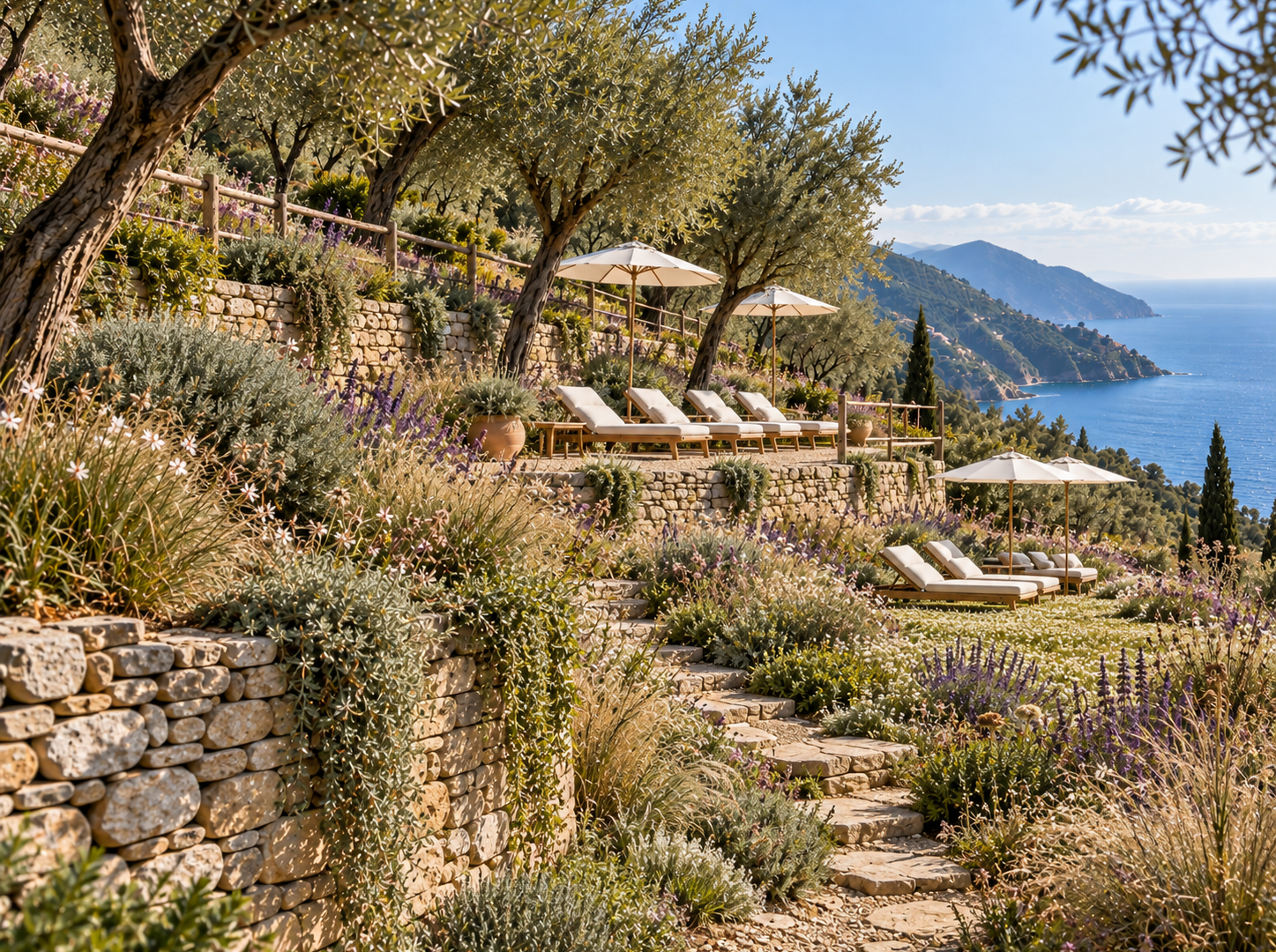
How can a garden in Liguria truly belong to its place? This study begins with the local climate, topography and landscape materials to explore how a Mediterranean planting community can be both environmentally adapted and rooted in the character of the Ligurian landscape.
Starting from the conditions of the place
The Ligurian landscape is not a permanently green, moist and fertile backdrop. Intense sun, summer drought, strong winds, poor soils with limited water-holding capacity, together with terraced olive groves, dry-stone walls and gravel paths, define the particular conditions of this landscape.
For this reason, the study does not begin by asking “which plants look beautiful?” but with a more fundamental question: what kind of planting community can genuinely adapt to this climate while continuing the landscape language of Liguria?



Building a stable Mediterranean structure
The foundation of a garden designed to last is not its flowering season, but a plant structure capable of maintaining spatial order and presence throughout the year.
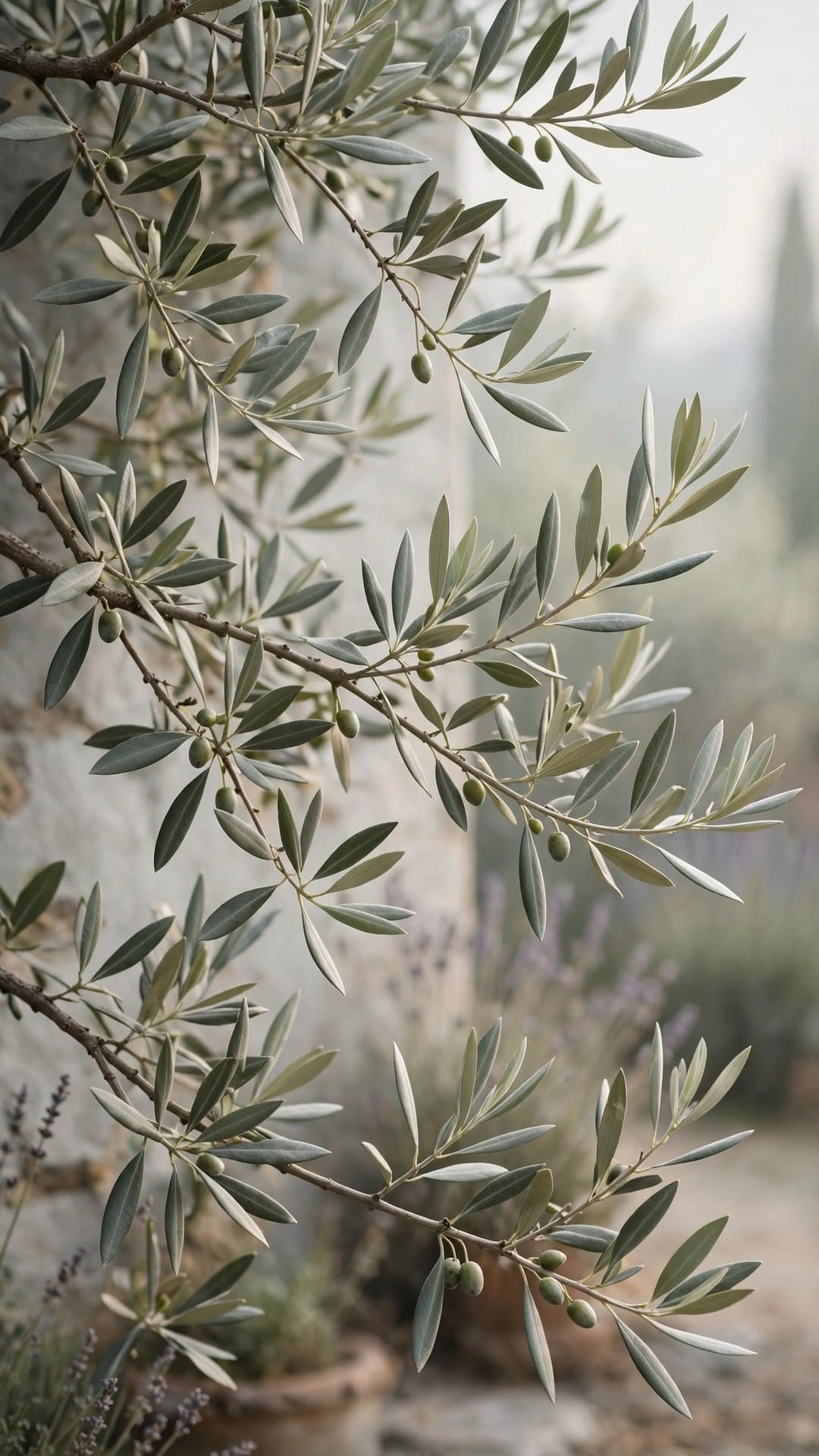
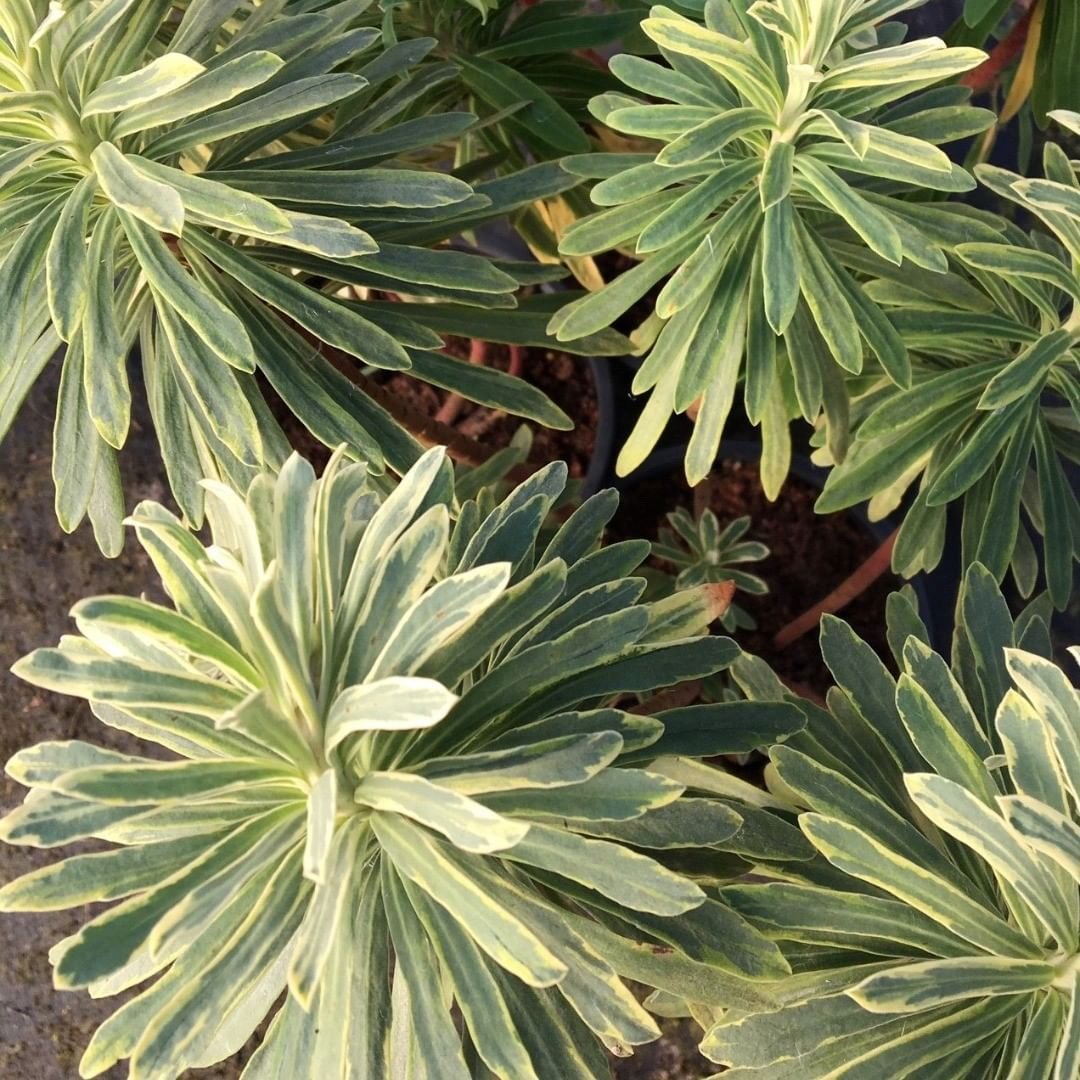
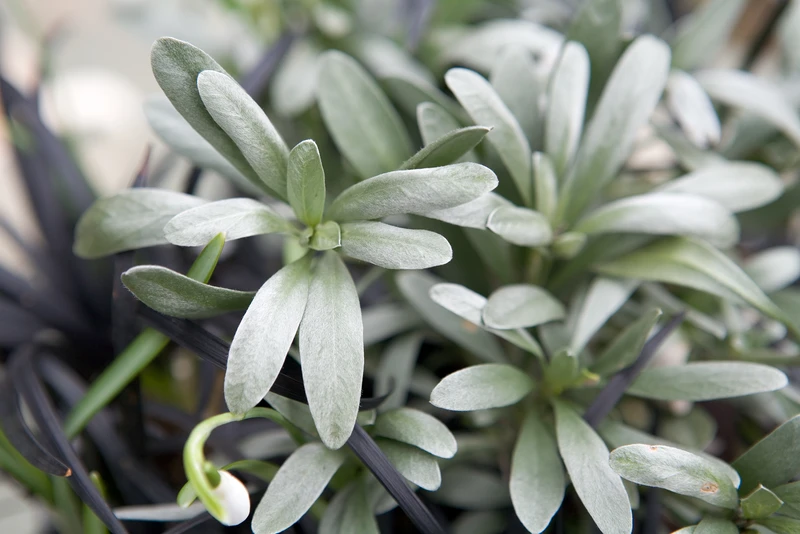
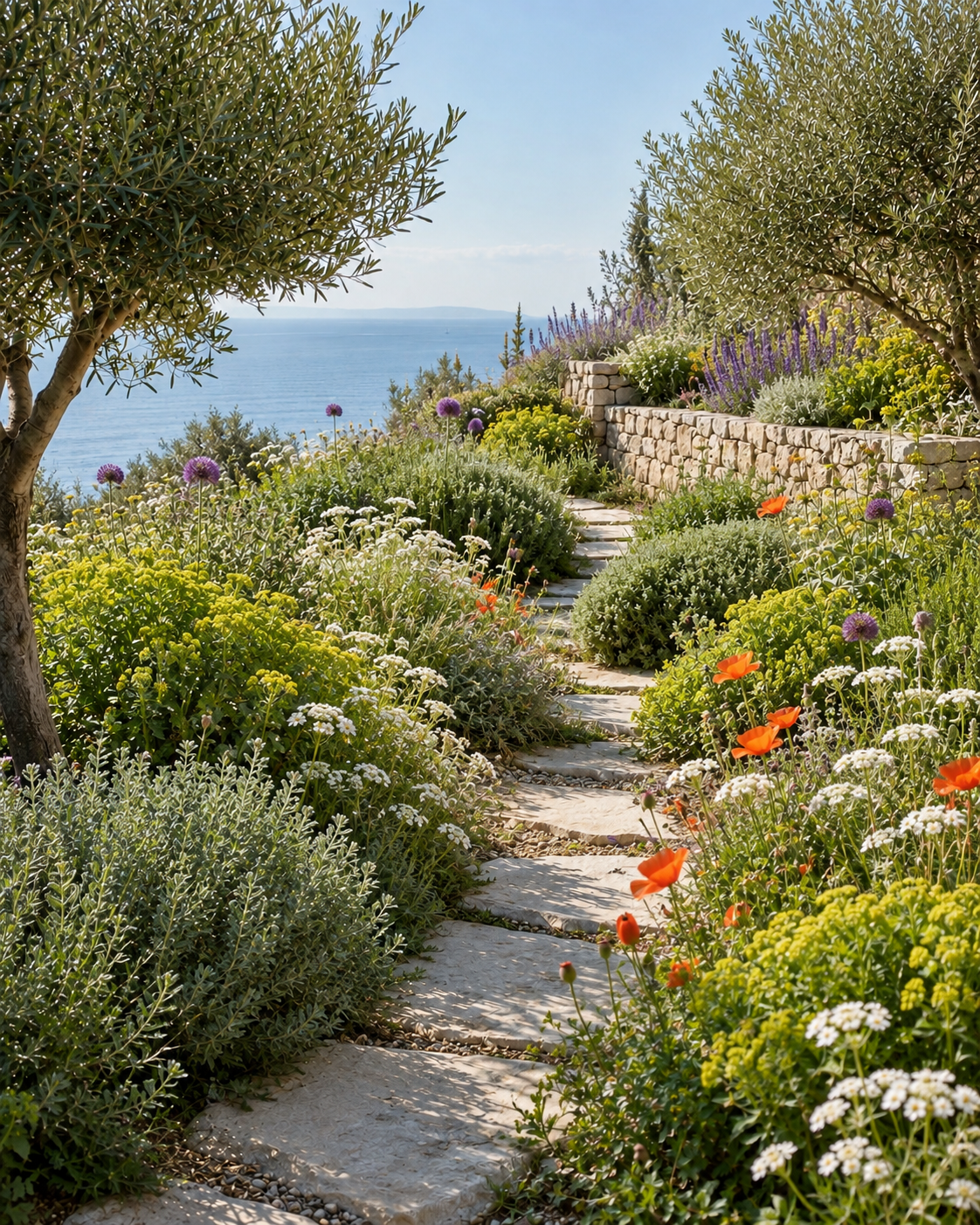
Using Mediterranean garrigue vegetation as a starting point, the design builds a stable background through subtle variations in green, texture and reflected light. Olive trees, together with Westringia and Festuca, establish a grey-green and blue-green base. Teucrium, Stachys and Convolvulus introduce silver foliage and softly reflective textures. The acid-green tones of Euphorbia, together with the warmer seasonal hues of Stipa, add small shifts in brightness within an otherwise restrained palette.
Rather than relying on large quantities of brightly coloured flowers, the palette is built around: olive green · blue-green · silver · acid green. The result is a Mediterranean base that feels restrained, continuous and closely connected to the landscape of the olive groves.
From individual plants to planting communities
Plants are not treated as isolated objects. Instead, the study focuses on the relationships between species: which plants share similar requirements for sunlight, soil and water; which can create effective ground cover and reduce exposed soil; which provide long-term structure and which introduce seasonal change; and how growth, expansion and renewal can gradually create a more stable community.
Drought-tolerant aromatic species such as Phlomis and Salvia, for example, can form a relatively stable middle layer, while shorter-lived and more dynamic perennials move through and around them. The subject of the design is therefore no longer the individual plant, but a plant community capable of evolving over time.
Allowing spontaneity within a stable structure
Naturalistic planting does not mean allowing everything to grow without control. The key principle is: establish the structure first, then leave room for change.
Olive trees, evergreen shrubs and aromatic plants create the long-term framework. Within that framework, more temporary and spontaneous elements can appear: bulbs emerging unexpectedly in spring; annuals and biennials that self-seed and shift slightly from year to year; perennials and airy flower heads reaching their peak through summer and autumn.
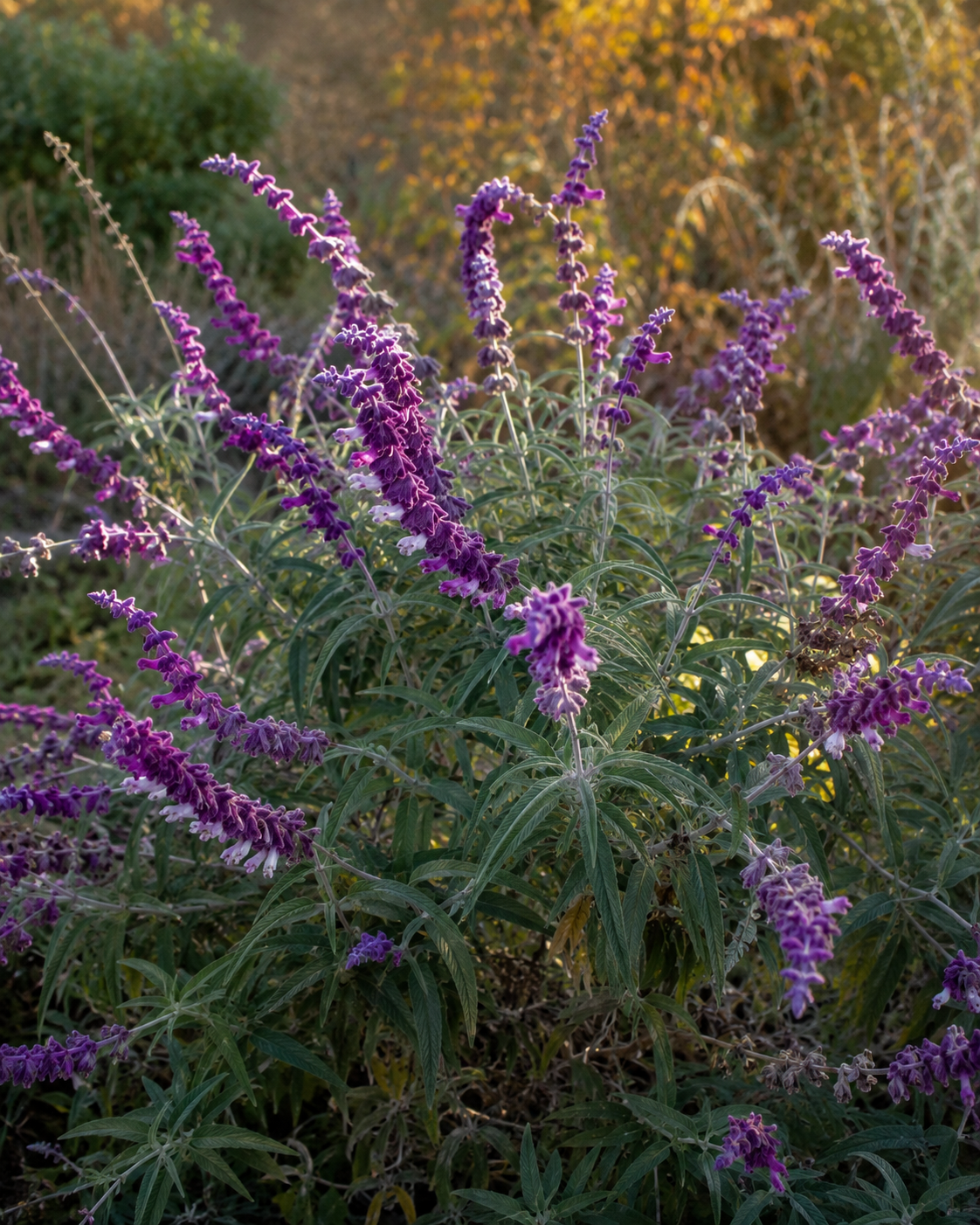
Spring: bulbs and short-lived species emerge between evergreen masses, creating temporary moments of stronger contrast and colour. Autumn: late-flowering species such as Salvia leucantha extend seasonal interest and maintain depth and movement beyond summer.
The ground plane is also part of the planting design
Ligurian identity does not come from vegetation alone. Light-coloured gravel, natural stone slabs, dry-stone walls, exposed soil and planting work together as a complete ground-plane system. For this reason, lawn is not treated as the default solution for every open area.
Different spaces can respond to their use through a range of surfaces: gravel mulch, stone paths, compacted earth, walkable flowering groundcovers and perennial planting communities. Mineral materials and vegetation work together, referring back to the traditional landscape while reducing unnecessary irrigation and maintenance.
Ligurian planting strategy
The study can ultimately be summarised through five steps.
01|PLACE — Read the site first
Begin with sun, drought, wind, soil, slope and the existing landscape before selecting plants.
02|STRUCTURE — Build a stable framework
Retain the olive trees and use evergreen garrigue shrubs and drought-tolerant species to create a stable lower layer throughout the year.
03|COMMUNITY — Build planting communities
Group plants according to compatible ecological requirements, combining different heights, life cycles and growth habits. A balanced pattern of competition and complementarity helps increase ground coverage, community stability and visual depth.
04|SEASONAL LAYER — Introduce seasonal change
Integrate bulbs, annuals, biennials and seasonal perennials so the garden keeps transforming within a stable structure.
05|EVOLUTION — Manage succession, don’t block it
In natural succession, open herbaceous vegetation tends to evolve towards shrubland and, later, woodland. The design works with this process: through ground cover, planting density and selective management of competition, an open, stable understorey can be maintained beneath the olives.
In this way the garden keeps its seasonal change without continuously evolving into dense shrubland, reducing the need for repeated clearing and reconstruction over time.