
Seasonal Planting Garden
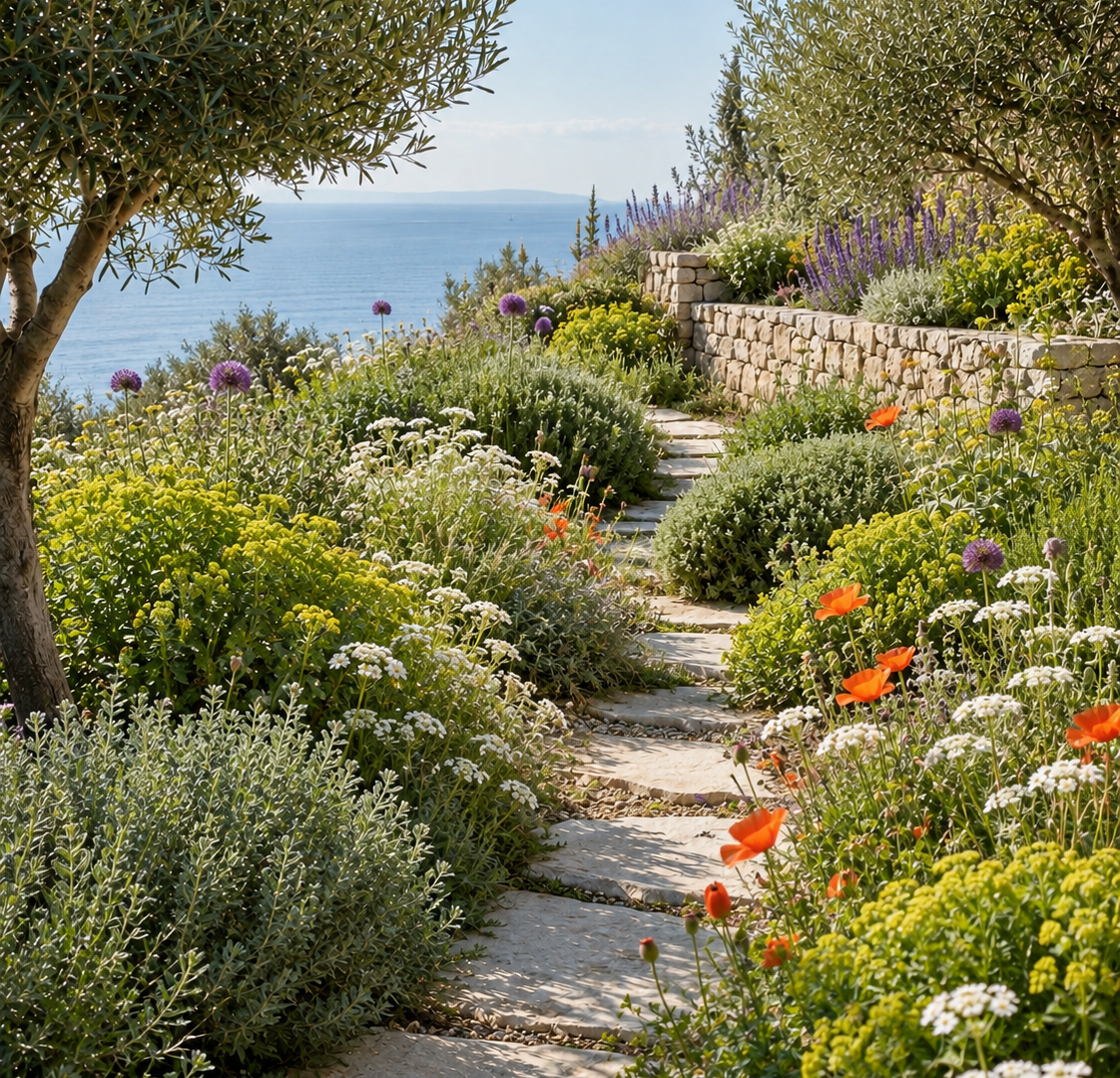
This study explores time as a design material. Rather than aiming for a single “perfect” moment, it asks how a planting community can change throughout the year while maintaining spatial structure, seasonal character and visual value.
A garden is not a still photograph
A real garden is never static. It moves continuously through different stages: emergence → flowering → expansion → decline → drying → pruning → regeneration.
The subject of design is no longer only the plants themselves, but also the way they change over time.
Designing with time
To keep the garden spatially coherent throughout the year, the planting community is organised into three temporal layers.
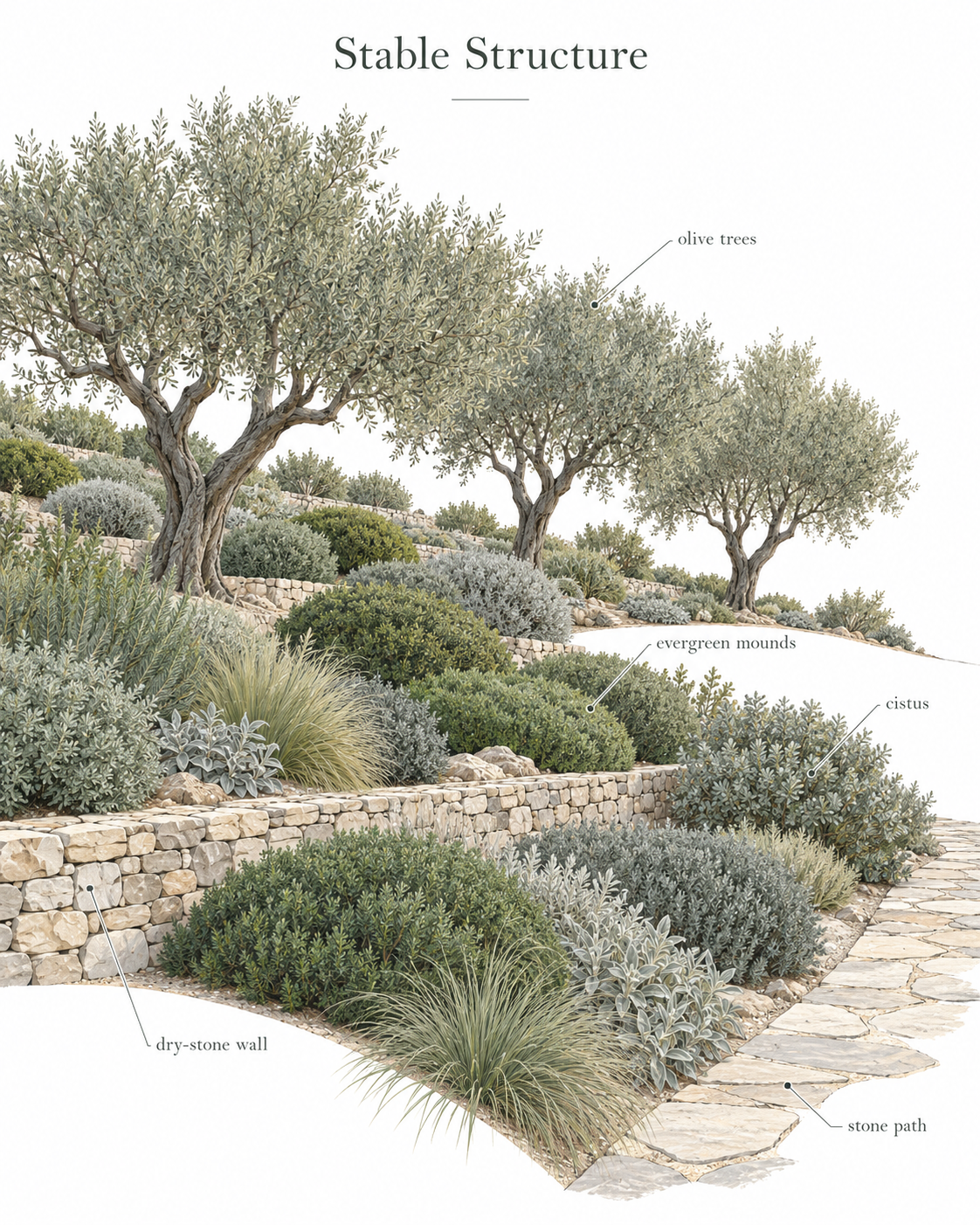
01. Stable structure
Evergreen and relatively constant plants form the permanent framework of the garden. They define boundaries, volumes and rhythm, allowing the composition to remain legible even when flowering species disappear.
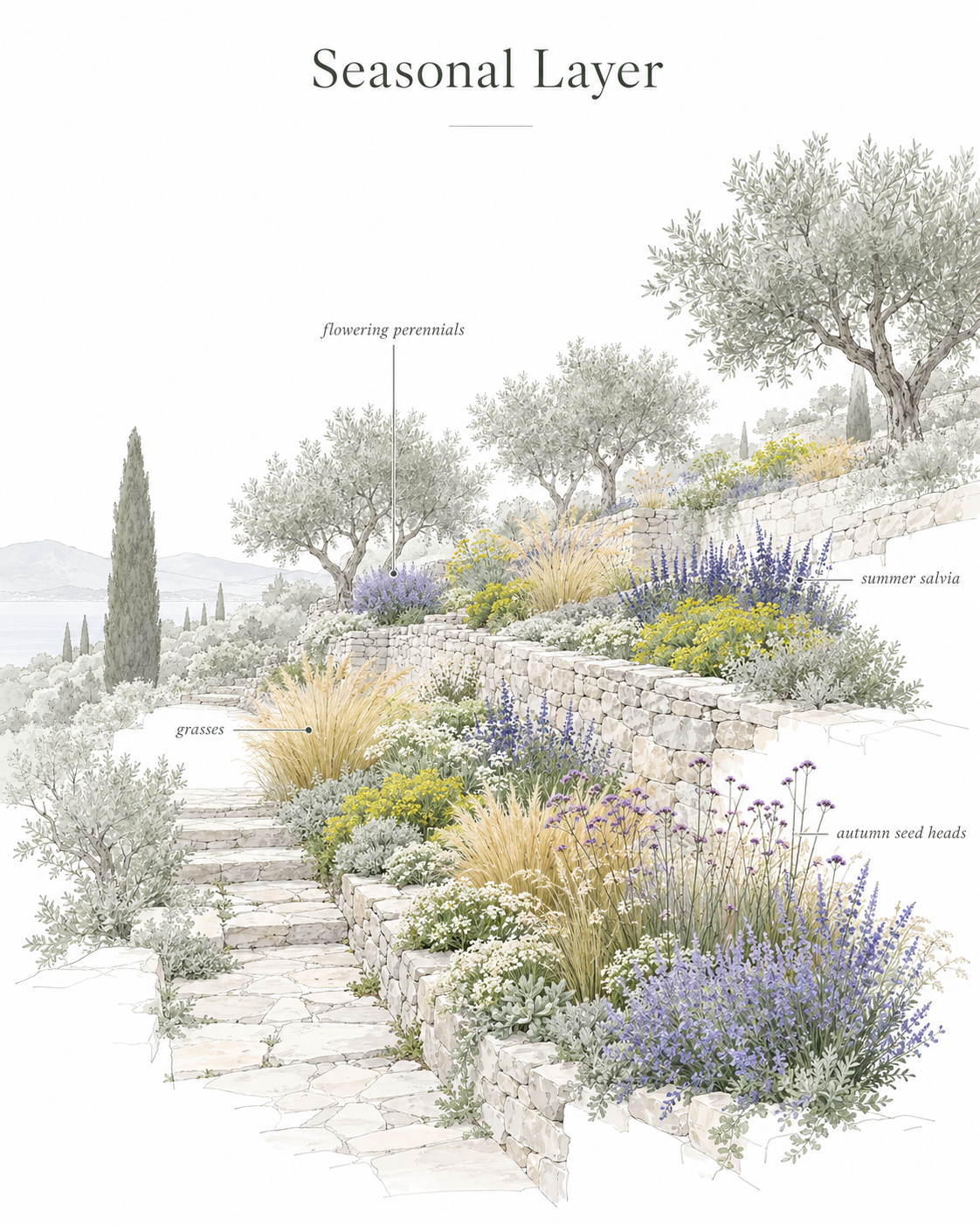
02. Seasonal layer
Perennials, ornamental grasses and plants with a strong seasonal presence reach their peak at different moments of the year. Colour, height, texture and movement gradually change as their cycles unfold.
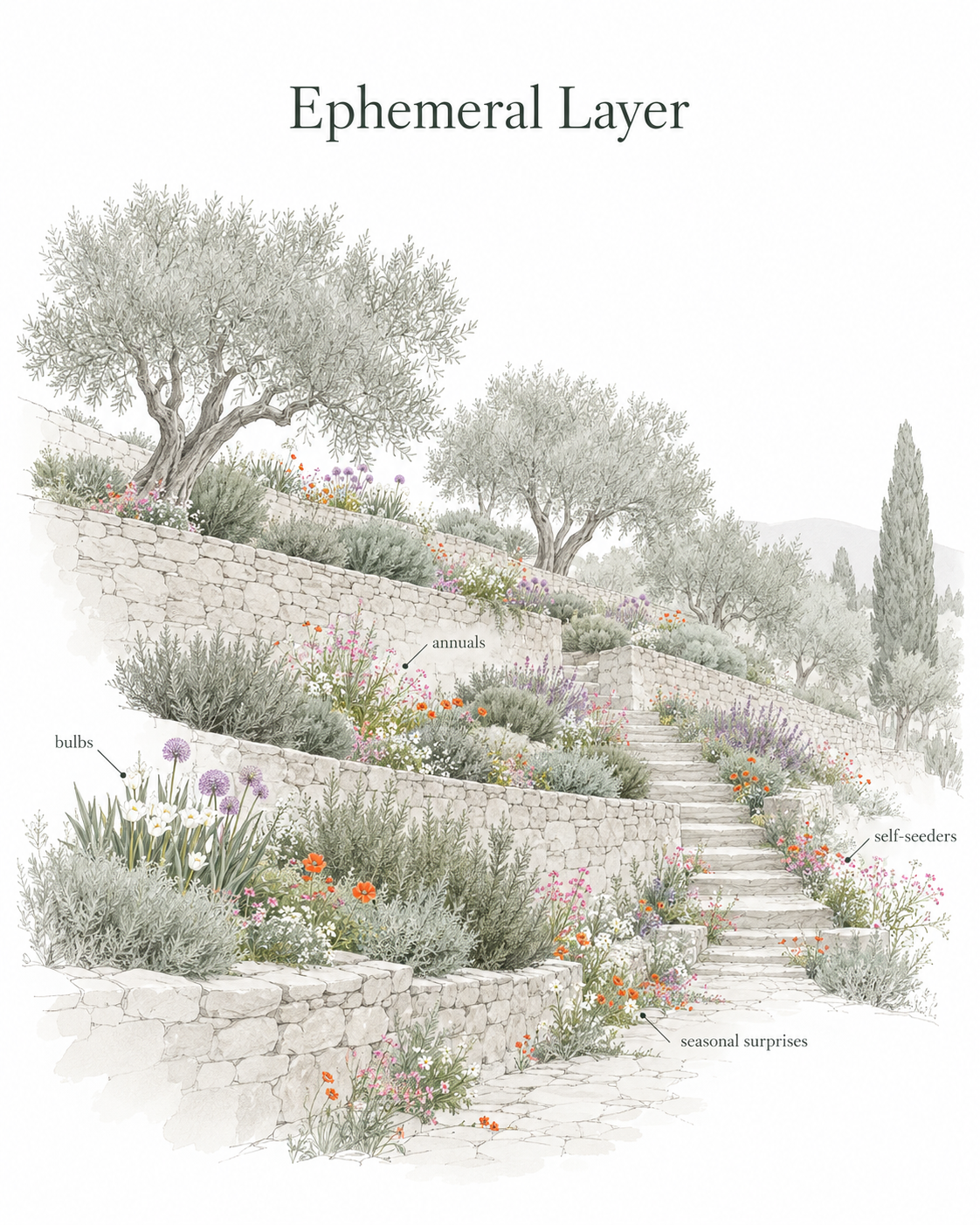
03. Ephemeral layer
Bulbs, annuals, biennials and selected self-seeding plants appear only for limited periods. They do not form the permanent structure of the garden, but introduce spontaneity, surprise and an element of unpredictability.
One garden, four seasons
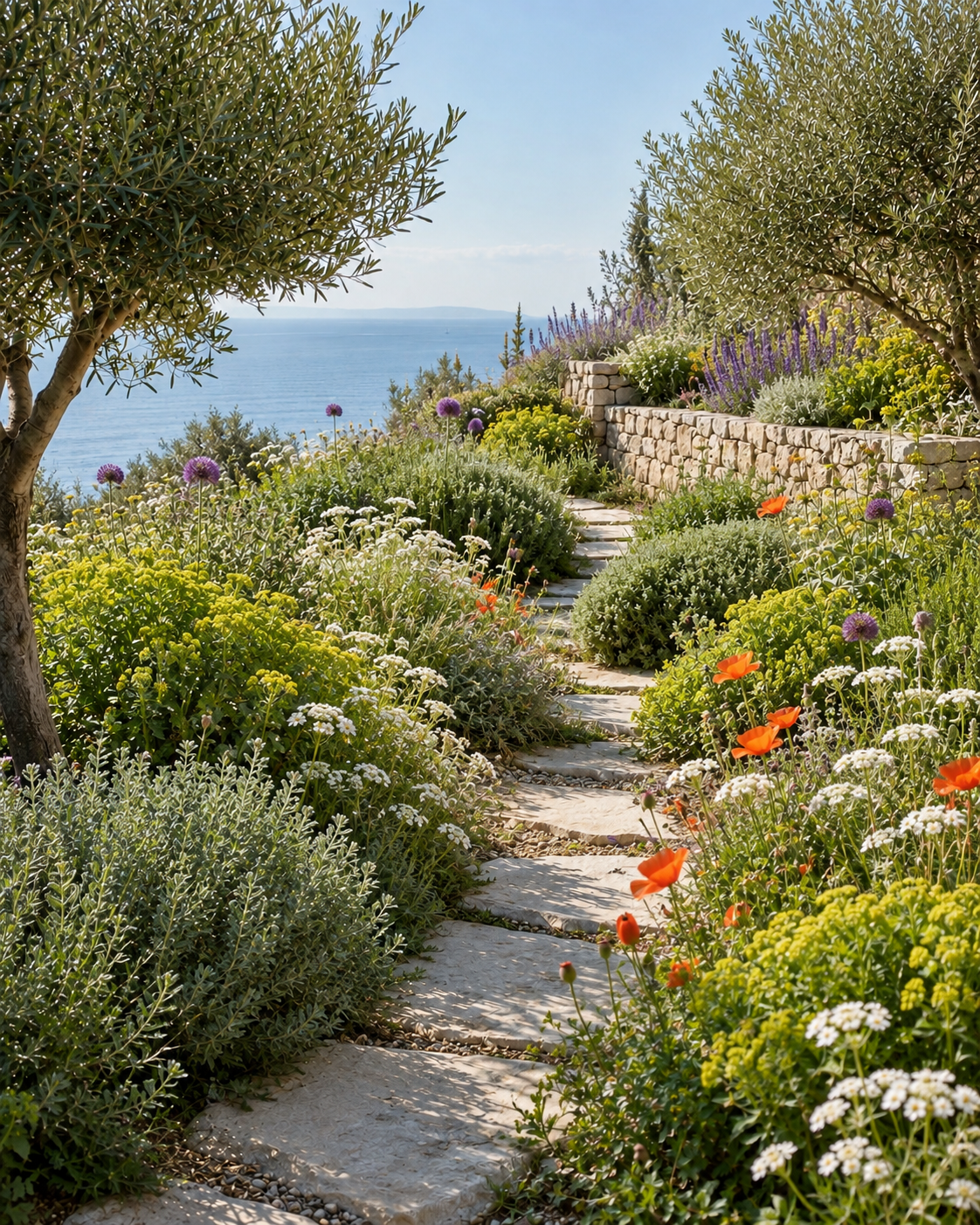
SPRING
Emergence & contrast
Bulbs, Papaver and Orlaya emerge through the evergreen structure. Fresh foliage contrasts with silver-grey leaves, while the planting community gradually begins to occupy the spaces left open by winter.
Focus: fresh foliage, bulbs, early flowering, contrast between fresh green and silver foliage.
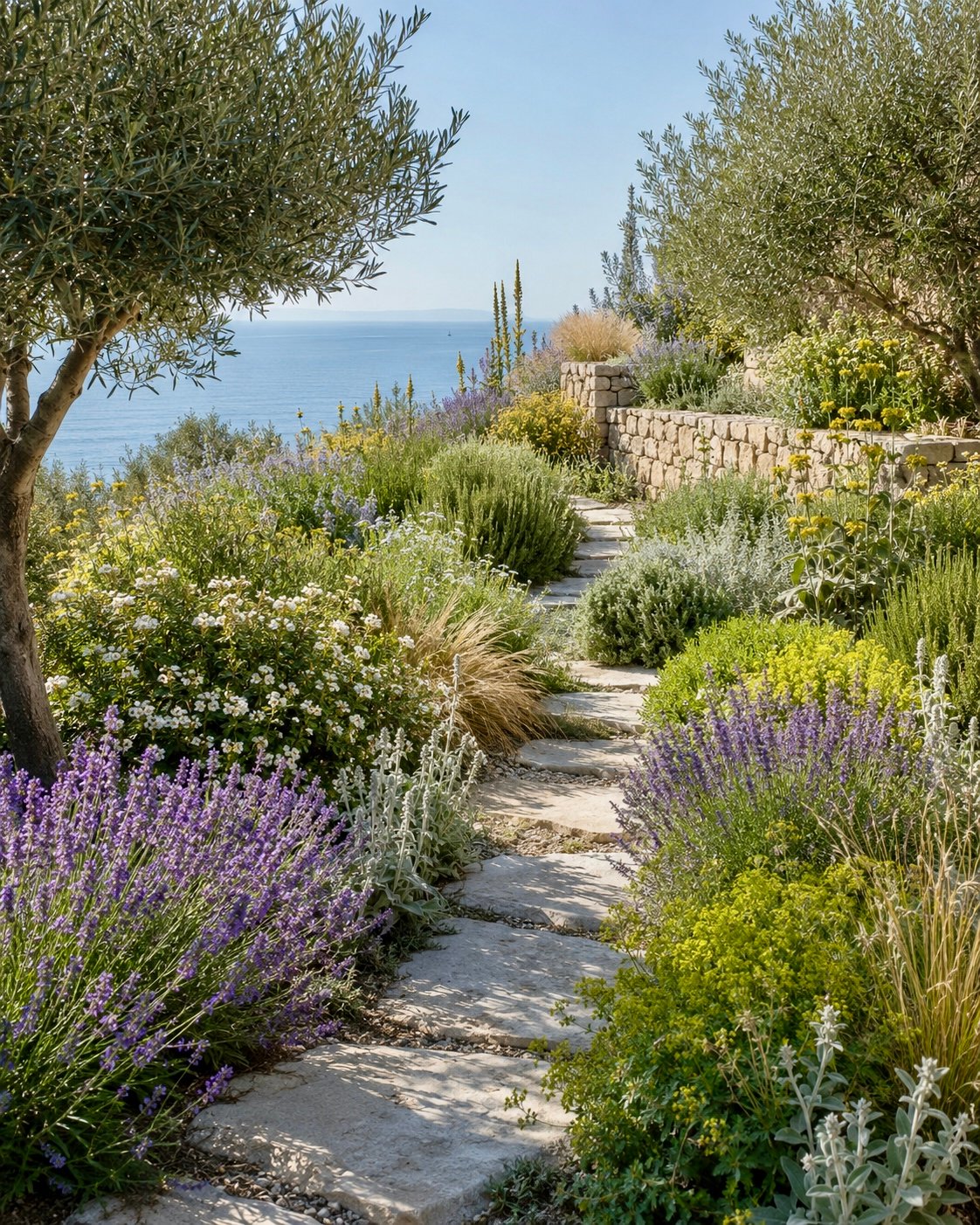
SUMMER
Fullness & flowering
Perennials reach their main period of growth and flowering, expanding in volume and softening the edges of the path. Nepeta, Salvia and other blue-purple flowering plants define the seasonal character as the planting reaches its greatest density.
Focus: Nepeta, Salvia, stronger massing, blue-purple palette, peak flowering.
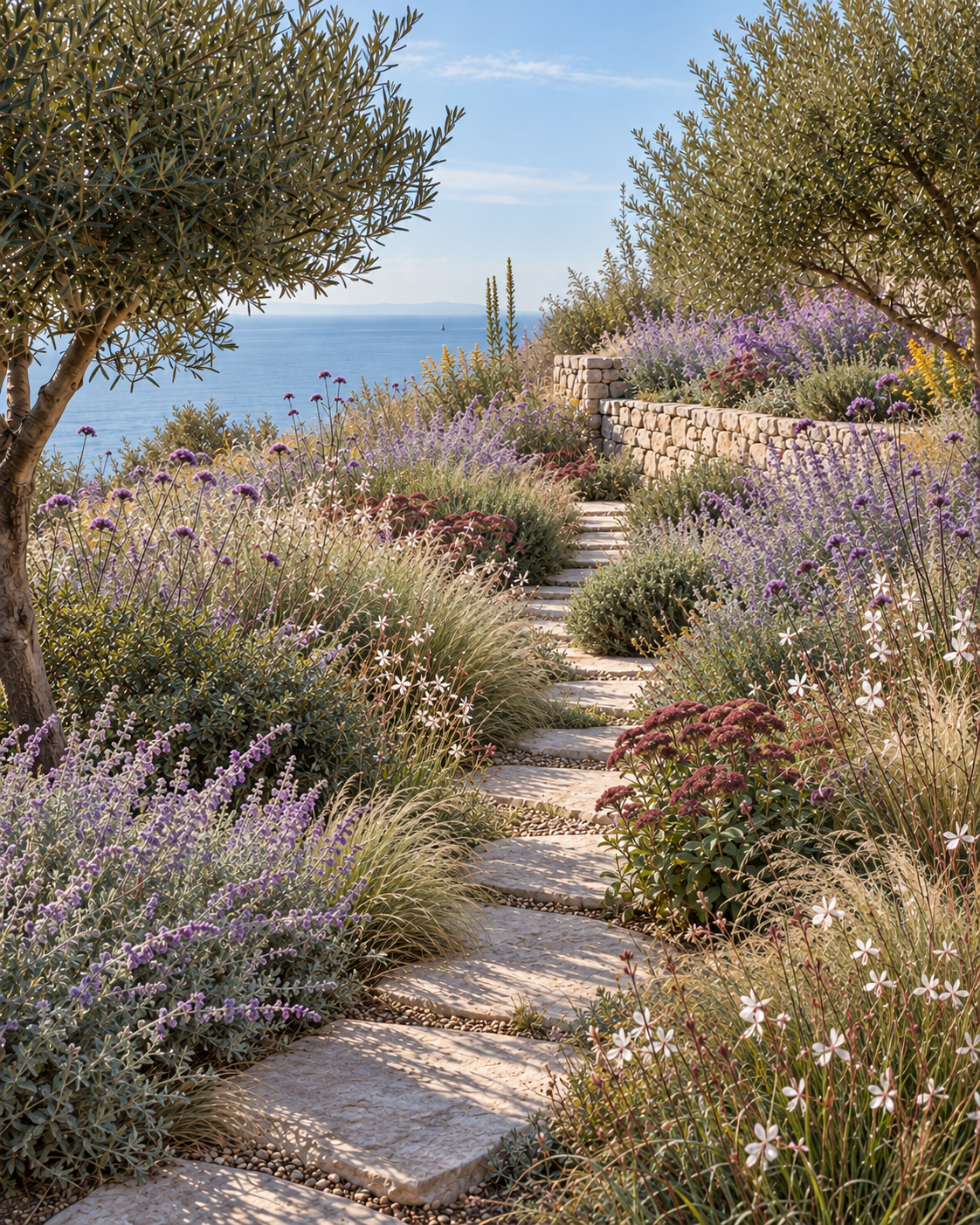
AUTUMN
Texture & movement
As summer flowers begin to fade, attention shifts towards grasses, late-flowering perennials and seed heads. Sedum, Verbena and ornamental grasses create a looser, more dynamic and textural structure.
Focus: Sedum, Verbena bonariensis, ornamental grasses, seed heads, looser structure.
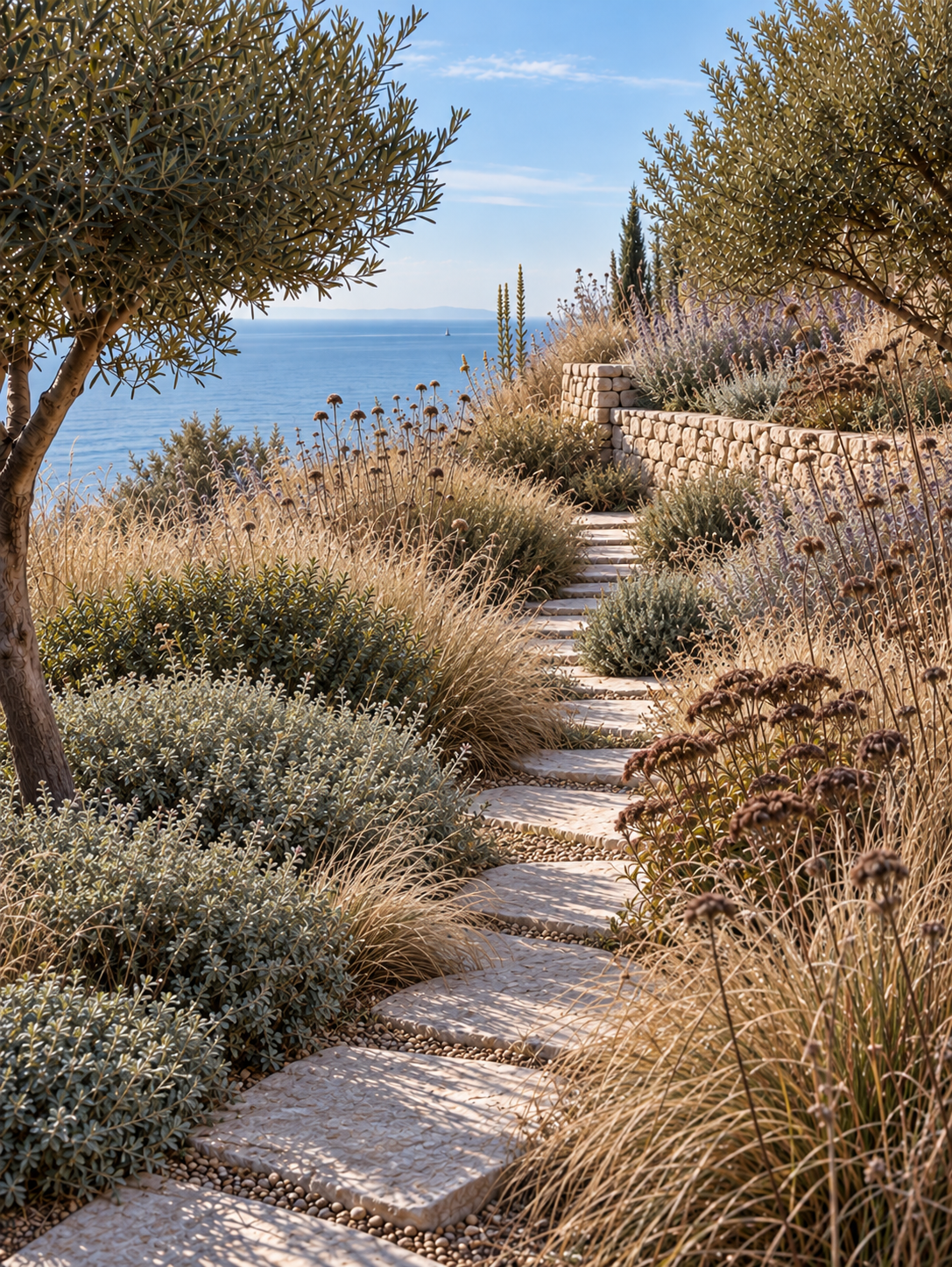
WINTER
Structure & memory
Many flowers disappear in winter, but the garden does not lose its presence. Evergreen masses continue to define the spatial framework, while dried grasses, stems and seed heads retain traces of the previous season. With less colour, the form and silhouette of the planting become even more visible.
Focus: evergreen structure, dried grasses, seed heads, reduced colour, stronger emphasis on form.
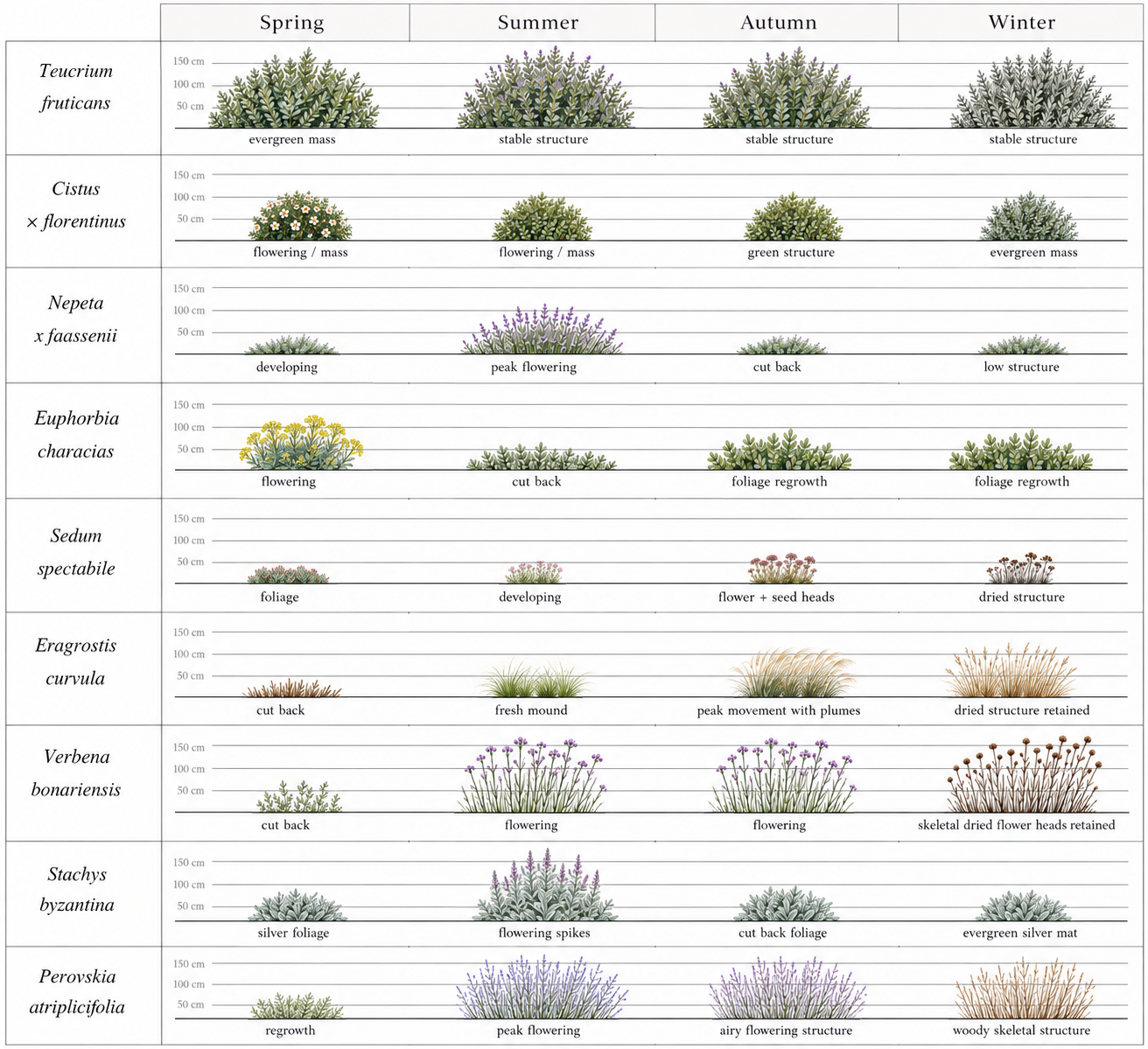
Designing plant behaviour, not simply selecting plants
The role of a plant is not fixed throughout the year. A species may appear as a low foliage mass in spring, become a major flowering layer in summer, recede after being cut back in autumn and continue to contribute through foliage, stems or dried seed heads in winter.
Plant selection therefore considers not only how a plant flowers, but also: when it emerges, how tall it becomes, how long it lasts, how it declines, when it is cut back and which plant will visually succeed it.
Height, density and succession
The spatial structure of a plant community changes continuously throughout the year. Spring begins with lower, more legible layers. In summer, perennials expand and density increases. In autumn, grasses and late-season plants progressively occupy the upper layers. In winter, evergreen masses, dried stems and seed heads redefine the silhouette of the garden.
Planting design is therefore not only about placing plants on a plan. It is also about designing how the following qualities change over time: height, density, transparency and spatial layering.
Maintenance is part of the design
Maintenance does not begin after the planting design is finished. The timing of pruning determines when one plant disappears from the composition and when another is allowed to become more visible. Cutting back selected perennials after flowering, for example, can return them to a lower foliage structure while revealing the autumn plants developing behind them. The maintenance schedule therefore becomes part of the planting composition itself.
A garden with value in every season
This planting system is not designed to reach its “best moment” during a single month. Through stable structure, staggered flowering, varied height, contrasting plant forms and carefully timed maintenance, the garden develops a different character throughout the year.
Spring brings emergence and surprise; summer fullness; autumn movement and texture; winter returns the focus to structure. The value of the garden lies not only in its moment of peak flowering, but in the entire process of its transformation.